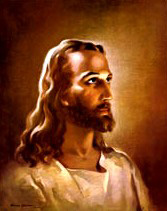
In Matthew 16:15, Jesus asks his disciples, “who do you say I am?” He asks us the same, but maybe he would also be laughing and curious and ask, “what do you think I looked like?” The face of Jesus has been depicted countless times in religious artwork and gained the devotion of many Christians over the years, including and especially Saint Thérèse of Lisieux, whose full religious name was “Thérèse of the Child Jesus and of the Holy Face.” Often his face is shown as white with narrow features and long, flowing brown (not black) hair. This includes the great masters of western (mostly European) religious art over the centuries and the devotional images, such as holy cards, from more recent times. One extremely popular example of this latter type is shown in image 1, Head of Christ, by Warner Sallman that dates back to 1941.
How do you imagine Jesus would have looked all those roughly 2000 years ago? Since there are no detailed descriptions of Jesus in the Gospels and no drawings or paintings of him at the time for reference, it really leaves a lot to the imagination. It’s understandable that we would relate better to a Jesus who looks like us, but what would the historical Jesus really have looked like?
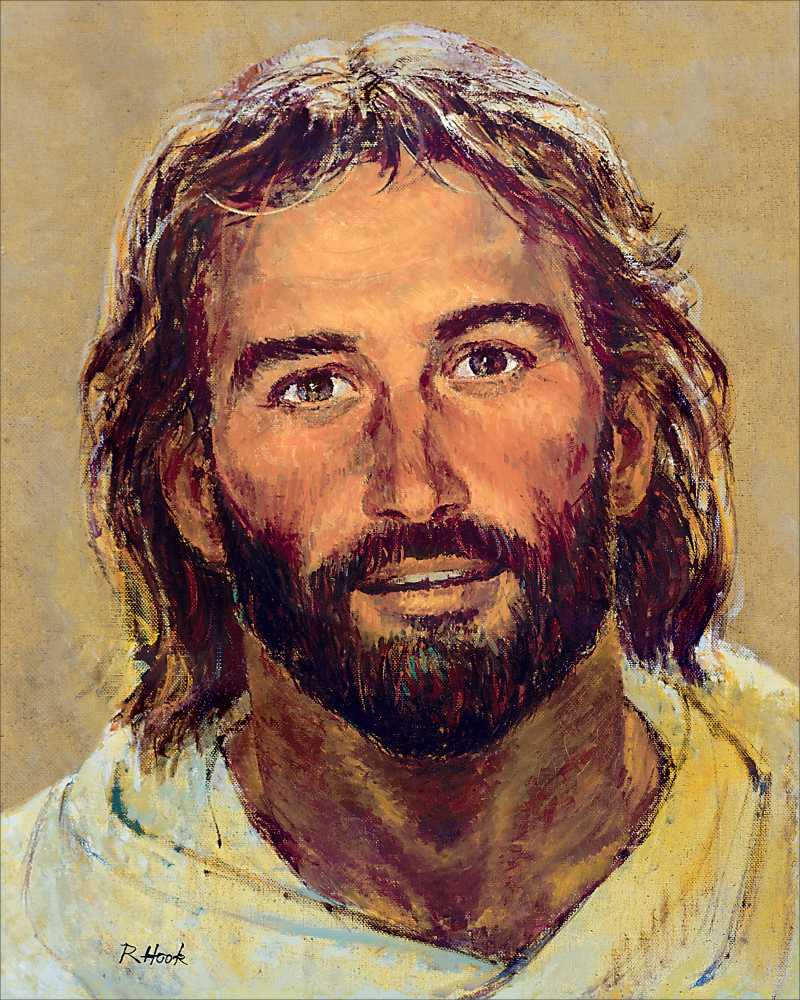
Image 2 shows the picture of Jesus by Richard Hook that I had in high school, where Jesus looks directly at the viewer, with the beginning of a smile. Still pretty white and definitely no black hair, this image seems to me to be significantly more approachable and realistic than most of the overly sentimental, idealized images of Jesus from earlier in the twentieth century. To me, he certainly looks more rugged, more like a young, strong, friendly carpenter than Sallman’s image above. His eyes look kind, and this is the Jesus I prayed to back then.
I was prompted to write this blog post by a recent sermon by Steve Beckham that is posted at the Thoughts Along the Way, website (reference 3). He asks, “How much is your love for Jesus affected by your mental picture of Jesus, the picture of Jesus you carry in your head and in your heart? And how does that picture affect the way you hear Jesus?” Then Beckham referenced a fascinating study, first published in Popular Mechanics magazine in 2002, that used the tools of forensic anthropology to visualize Jesus in a new, more authentic way.
Measurements from three typical skulls of first century Jewish men near Jerusalem, were provided by Israeli archaeologists to Richard Neave, a retired British anatomical artist, who was able to recreate what Jesus might have looked like. He did this using precise three-dimensional computerized tomography (CT) modeling techniques. Specialized computer programs were used to evaluate known measurements of the thickness of soft tissue at key areas of human faces. With access to this large amount of physiological information, Neave was able to incorporate the muscles and skin overlying a representative Semite skull into a digital CT model, verified with the anthropological data.
Next, the data were used to create a physical cast of a representative skull to which layers of clay matching the thickness of facial tissues specified by the CT model were added. The lips, nose, and eyelids were formed in clay, following the shape of the underlying muscles that had been constructed.
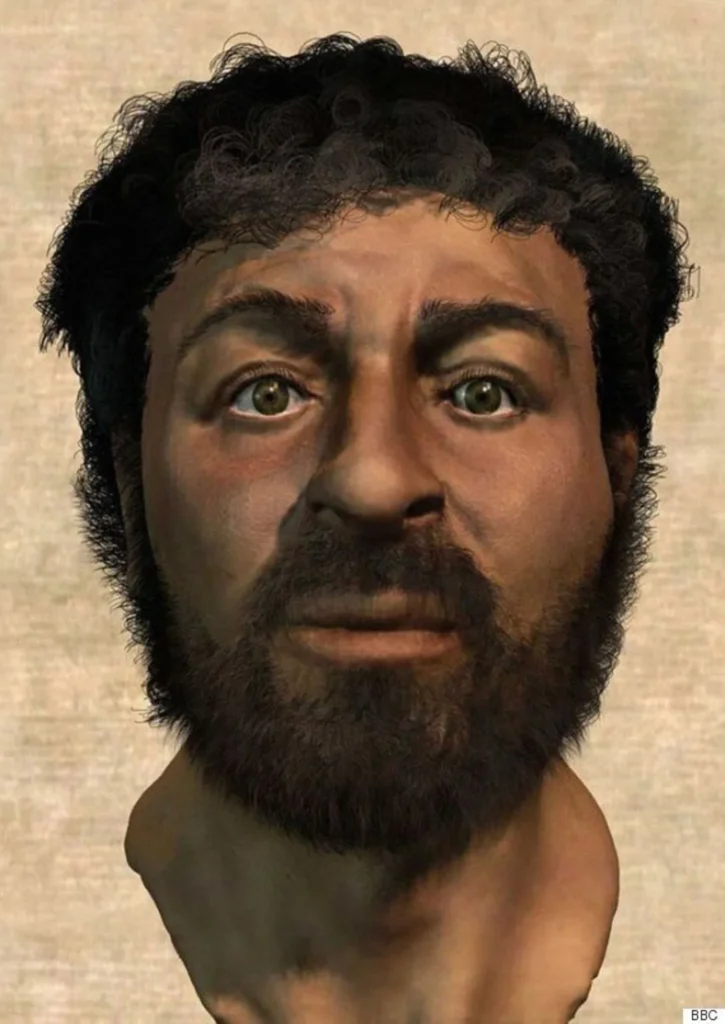
What the model was not able to predict were the hair and skin color of Jesus. So Neave and his team relied on first-century drawings found at various archaeological sites to determine how the skin and hair might have looked. From these drawings, it was determined that he would have had a beard and that his eyes would have been dark-colored. And, based on the interpretation of biblical scholars, the team decided that the length of Jesus’ hair would probably have been short with tight curls. The bible reading referenced is 1 Corinthians 11:14, where Paul writes, “Does not nature itself teach you that if a man wears long hair, it is degrading to him?”
Consequently, the recreated face, shown in image 3, indicates dark olive skin, curly somewhat kinky short black hair, and dark brown eyes. From analytical results of the skeletal remains of Jewish men at the time, it was determined that Jesus was probably between 5’1″ and 5’7″ tall and weighed around 110 lb. Does this look like Jesus to you? To me, this image makes him look scrappy, and maybe even a little concerned or worried. It seems like maybe he needs one of those times where he withdraws from the crowds. And how would you imagine and relate to Jesus, if you knew that he was, say, 5’2″ and quite a bit shorter than you? For me, it changes the way that I imagine his presence in the Gospel stories.
According to Popular Mechanics, Neave emphasized that the recreated face is just that of a typical adult man who lived in the same region at the same time as Jesus. Forensic depictions are not exact representations, even though they begin with measurements from actual skulls. The final image is quite dependent on the forensic artist, since there are variations in techniques used. Also, different forensic artists pay more or less attention to different aspects of the face. This is especially true with some of the features of the face, like the shape of the eyes, nose and mouth which very much determine what a person looks like.
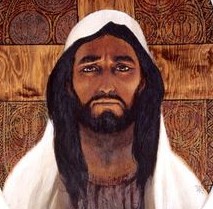
We do not know what the real Jesus looked like, but it is likely that he resembled most Jewish men from Galilee at the time, someone who would not stand out in a crowd. This idea is supported biblically in Isaiah 53:2-3 where Isaiah prophesies that the Messiah would have “no form or majesty that we should look at him, nothing in his appearance that we should desire him.”
Since Jesus was a carpenter who likely worked outdoors, it would make sense that he was more physically fit many of us these days. His face was probably also weathered by the sun, which might have made him look older than his roughly thirty years. It seems to me that image 3, the likeness of a dark and scrappy Middle Eastern man recreated by Neave, can remind us of the actual roots of our faith and perhaps can lead us to bring forward an engaging reimagination of Jesus, the Incarnate Word.
Readings: New Revised Standard Version Anglicised.
Reference 1: Mike Fillon, The Real Face of Jesus, Popular Mechanics Magazine, originally published in December 2002, last updated May 3, 2023.
Reference 2: Pat McCloskey, OFM, Naming Your God: The Search for Mature Images, Ave Maria Press, Notre Dame, IN, 1991.
Reference 3: Steve Beckham, Loving Jesus, Thoughts Along the Way, May 10, 2026.
Reference 4: Devotion to the Holy Face of Jesus, Boston Carmelites website, accessed May 28, 2026.
Image 1: Warner Sallman, Head of Christ, 1941.
Image 2: Richard Hook, American artist, Head of Christ, prints sold at Christian bookstores and circulated widely on social media.
Image 3: Richard Neave used forensic data from the skulls of first century Jewish men to illustrate what Jesus might have looked like.
Image 4: Louis Glanzman, American artist, Jesus, prints sold at Christian bookstores and circulated widely on social media.














Leave a Reply
Join the conversation by submitting a comment to this blog post below.