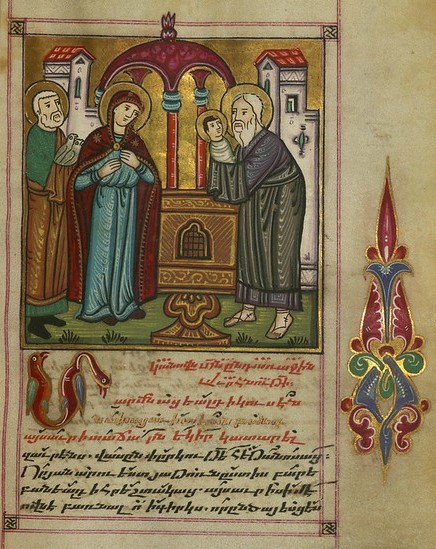
February 2 falls right at forty days after the Nativity, bringing an end to the Christmas and Epiphany seasons. This is a short reflection I wrote last year at this time about a hidden in plain sight aspect of the presentation at the temple. The feast day is known both as the Feast of the Presentation of Jesus at the Temple and as the Feast of the Purification of the Virgin. And, in some places, it’s called Candlemas, the day when candles are blessed for use in the remainder of the year. The tradition of celebrating Candlemas evolved, because Simeon calls Jesus “A light for revelation to the Gentiles,” and of course, we accept Jesus as the light that, at long last, came into the dark world. Our gospel text today is from Luke:
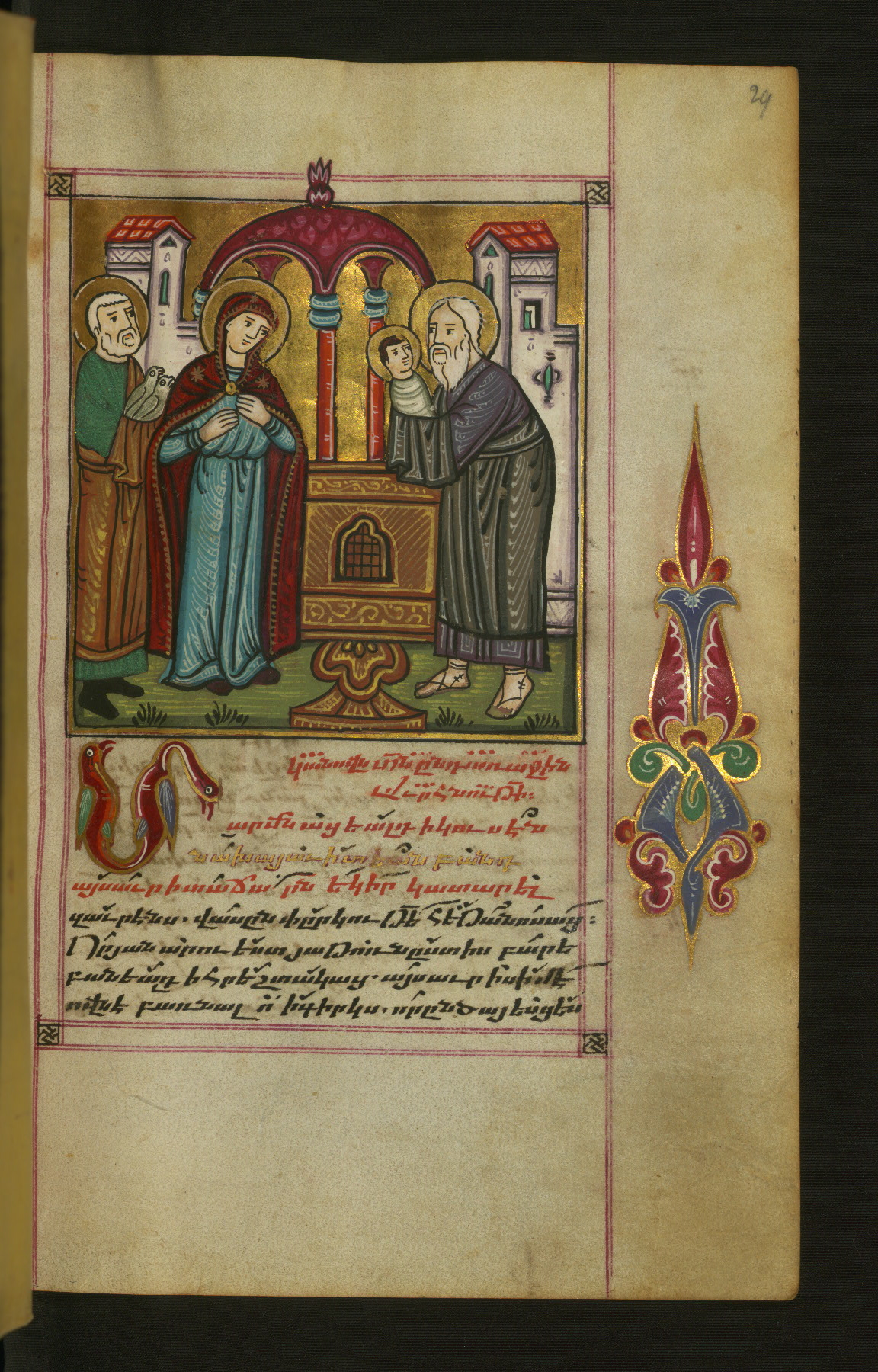
When the day came to purify them according to the law of Moses, the couple brought [Jesus] up to Jerusalem so that he could be presented to the Lord, for it is written in the law of the Lord, “Every first-born male shall be consecrated to the Lord.” They came to offer in sacrifice “a pair of turtledoves or two small pigeons,” in accord with the dictate in the law of the Lord.
There lived in Jerusalem at the time a certain man named Simeon. He was just and pious, and awaited the consolation of Israel, and the Holy Spirit was upon him. It was revealed to him by the Holy Spirit that he would not experience death until he had seen the Anointed of the Lord. He came to the temple now, inspired by the Spirit, and when the parents brought in the child Jesus to perform for him the customary ritual of the law, he took him in his arms and blessed God in these words, “Now Master, you can dismiss your servant in peace; you have fulfilled your word. For my eyes have witnessed your saving deed, displayed for all the peoples to see: A revealing light to the Gentiles, the glory of your people Israel.”
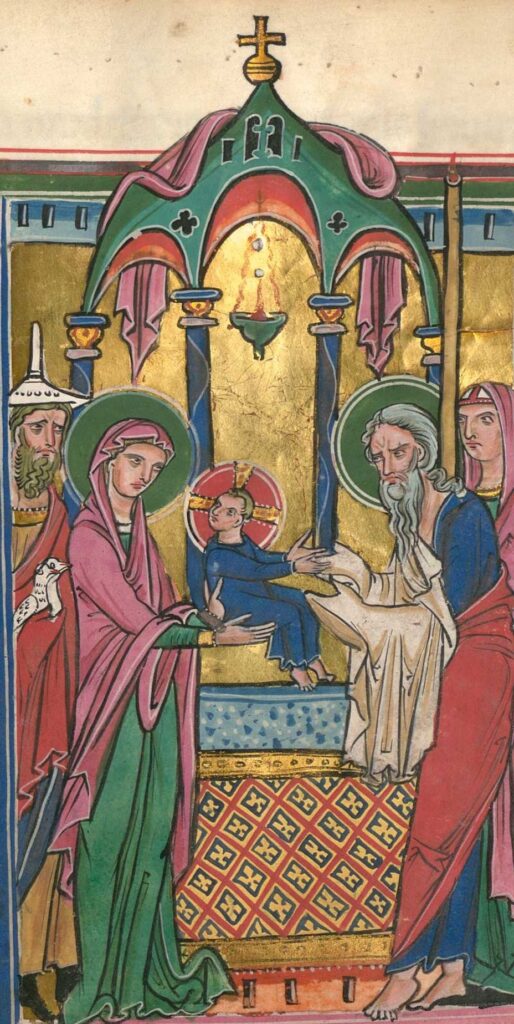
The child’s father and mother were marveling at what was being said about him. Simeon blessed them and said to Mary his mother, “This child is destined to be the downfall and the rise of many in Israel, a sign that will be opposed — and you yourself shall be pierced with a sword — so that thoughts of many hearts may be laid bare.”
There was also a certain prophetess, Anna by name, daughter of Phanuel of the tribe of Asher. She had seen many days, having lived seven years with her husband after her marriage and then as a widow until she was eighty-four. She was constantly in the temple, worshipping day and night in fasting and prayer. Coming on the scene at the moment, she gave thanks to God and talked about the child to all who looked forward to the deliverance of Jerusalem. (Luke 2:22-38)
We hear that Joseph and Mary brought Jesus to the temple in Jerusalem, in response to the law written in Exodus 13:12-15 that required them to present their firstborn son at the temple. It was also the occasion of the “purification” of Mary. According to Leviticus 12:1-8, Jewish women are ritually unclean after childbirth and must wait to present themselves at the temple until 40 days after giving birth to a son or 66 days after giving birth to a daughter. Then there is a ritual of purification, whereby she is blessed and welcomed back to the community. The family is required to bring a yearling lamb and a pigeon as an offering, but if they cannot afford to bring a lamb, like Mary and Joseph, they can bring two pigeons instead.
However, there is something more dramatic going on in this story. In 587 BCE, the Babylonians had invaded Jerusalem and destroyed the entire city, including the great temple. At that time, the Ark of the Covenant that was housed in the Holy of Holies at the temple was either destroyed or lost. Remember from the book of Exodus, that the Ark was the gold-covered box built to contain the Ten Commandments, the staff of Aaron, and a piece of the manna that had fed the Israelites in the desert. The Jewish people believed that the presence of God dwelled in the Ark in a way different and more intense than other places. When the temple in Jerusalem was rebuilt around 510 BCE, the Holy of Holies was restored, but the Ark—this particular presence of God—was still missing. Would the Holy Presence of God ever be returned to the Temple again? In our first lesson, from the book of Malachi, this morning we hear it prophesied:
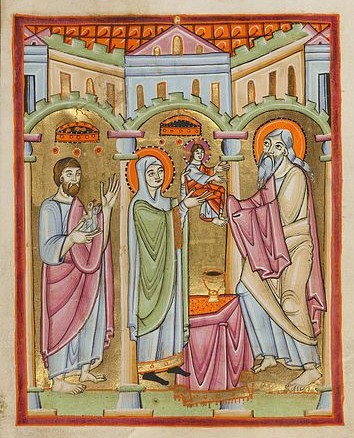
Lo, I am sending my messenger to prepare the way before me; And suddenly there will come to the temple the Lord whom you seek, and the messenger of the covenant whom you desire. Yes, he is coming, says the Lord of hosts.” (Malachi 3:1-2)
So Mary and Joseph came to the temple to fulfill their obligation to present Jesus. At that moment, God returned suddenly to the temple. Mary, who was the God-bearer, the “Ark of God as Jesus” was there, holding Him in her arms. What an amazing, sudden, and dramatic moment yet completely understated by God. It was a sacred moment buried in the cloak of the ordinary. This event had been anticipated for centuries, but there were no trumpets or flashes of lightning. In fact, only the elderly Simeon and Anna were able to recognize the fulfillment of the prophecy. They alone understood that they were in the presence of greatness and marveled at it.
What are some sacred moments buried in the ordinary of your own life? Can you see a way that events in your life have come together to provide a meaningful whole? Please consider paging down and leaving a comment.
Readings: The New American Bible, Confraternity of Christian Doctrine, Washington DC, 1970.
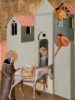
Image 1: Armenian Illuminated Image of Presentation of Jesus at the Temple, online files of manuscripts from the Walters Art Museum, Baltimore, Maryland, last updated November 30, 2018.
Image 2: Darbringung im Tempel, Psalter mit Totenoffizium, circa1265 CE, München, BSB, Clm 23094, folio 38, Digitale Bibliothek – Münchener Digitalisierungszentrum.
Image 3: The Presentation in the Temple, Getty Museum Collection, Ms. Ludwig VII 1 (83.MI.90), folio 28, illuminated manuscript by unknown artist, circa 1030-1040 CE, public domain.







Leave a Reply
Join the conversation by submitting a comment to this blog post below.