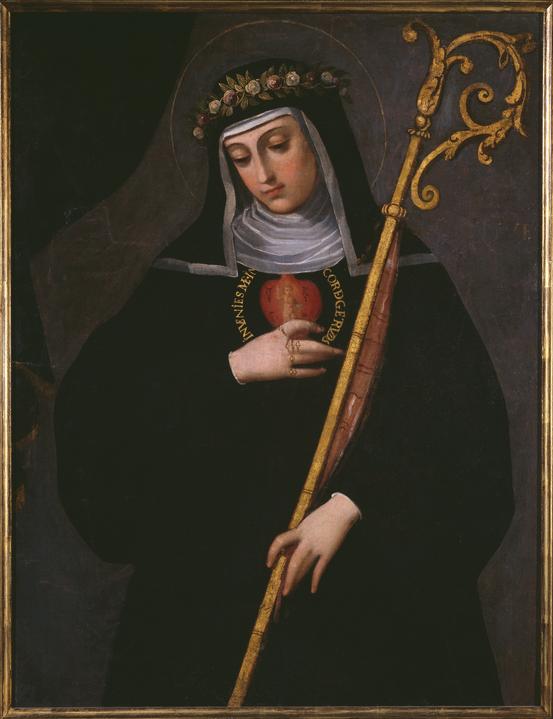
Gertrude the Great of Helfa (1256-1302) was a thirteenth-century nun and mystic with a high degree of cultural and evangelical stature. Her life and thoughts have come down to us through her writings that have uniquely impacted Christian spirituality.
Gertrude was born on the feast of Epiphany in Eisleben, Thuringia (in present day Germany), but nothing much is known of her parents or earliest life. She entered the Benedictine monastery school, Saint Mary’s Abbey, at Helfa in Saxony at the age of five. It is not known if she was brought there by her parents as an oblate to the church, or if she was an orphan. Her education, including Latin, rhetoric, and philosophy, was administered by Mechthild of Hackeborn (1241-1299), who was a younger sister of the monastery’s abbess, Gertrude of Hackeborn (1232-1291). Gertrude also assisted Mechthild with the abbey’s choir that provided chanting at liturgies, including at celebrations of Mass and the Liturgy of the Hours, (aka the Divine Office).
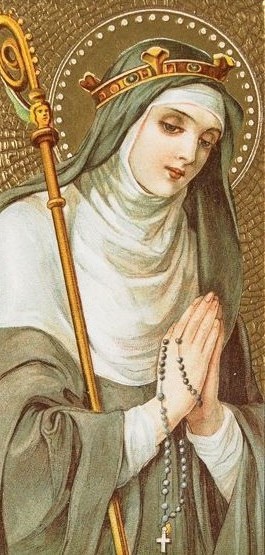
Although the abbey was affiliated with the Benedictines, the nuns were exposed to a Cistercian perspective, through the influence of the sermons of Bernard of Clairvaux (1090-1153). In addition, many of the spiritual directors for the sisters were Dominicans. The Helfa community, including the well-supplied library, was known as a place of culture, learning, and spiritual growth. The women were known for welcoming nonmonastic neighbors who were seeking spititual counsel or material provisions.
At the age of twenty-five, Gertrude began receiving visions that continued for the rest of her life. She described her powerful conversion experience as dispelling “the darkness of my life.” It was such a radical break from her previous life that it resulted in a shift of her priorities. Gertrude decided to turn away from her secular studies, in order to focus only on scripture, theology, and an intense practice of personal prayer and meditation.
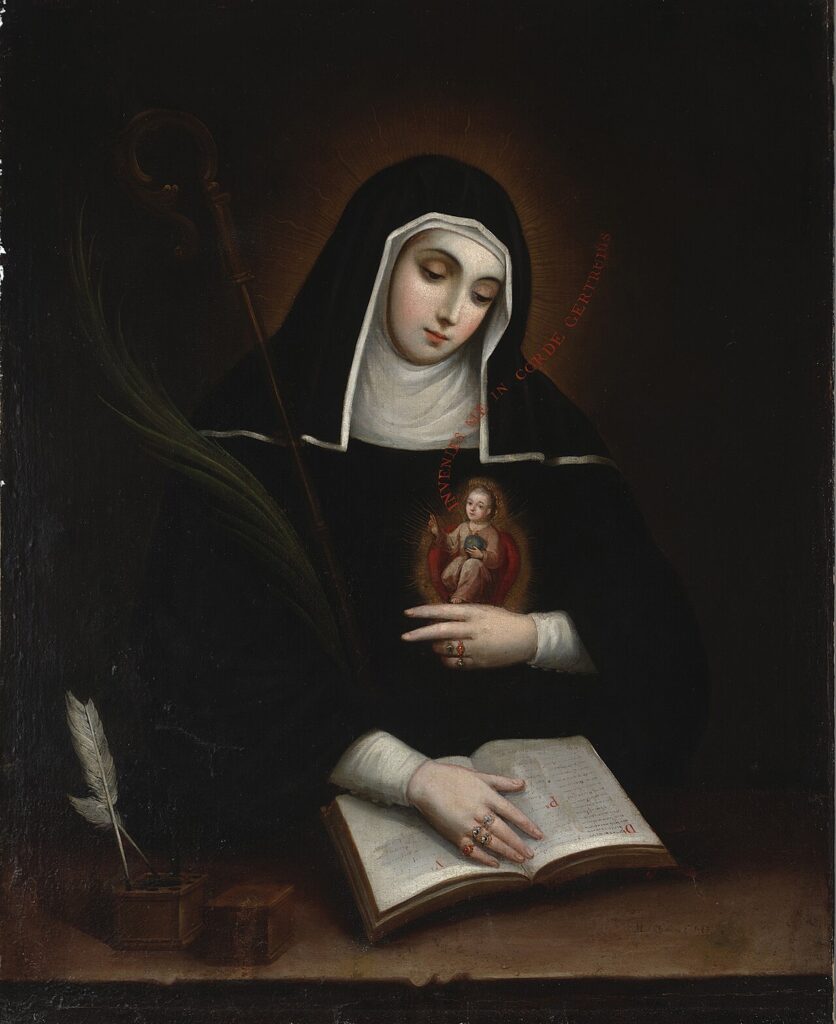
Shortly thereafter, she began writing treatises that could be used by her close-knit community of about one-hundred sisters. Gertrude’s best-known works are The Herald of Divine Love, which unfolds as a dialogue with God, and Spiritual Exercises, which is a collection of prayers, meditations, instructions, hymns, and rituals connected with biblical themes and the liturgy.
Influenced by Bernard of Clairvaux, Gertrude was also an early proponent of the Sacred Heart of Jesus, which featured significantly in her mystical visions. This was a devotion to the physical heart of Jesus, which was rooted in both his humanity and divinity. Her focus on the Sacred Heart resided in compassion and reciprocal love rather than suffering and a need for reparations. To Gertrude, the Sacred Heart is a mechanism that establishes communication and union between humans and God. Jane Klimisch writes that Gertrude’s active devotion can be seen through her use of the word suppletio in her writings, meaning “the way a compassionate God supplies, through us, what is lacking.”
In her later years, Gertrude was frequently ill and could not devote as much time as she would have liked to counseling people spiritually. Not much was recorded about her end of life, but her feast day is November 16.

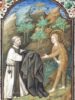
Here is the quote from Gertrude that I included in my book, Women Give Voice to Wisdom: Praying Lectio-Visio Divina and the acrylic monoprint that I made to go with it:
O sweetness of my life,
Only Love of my soul,
You led me through a desert without a path,
Over arid land,
To this green valley,
To praise Your Love.
Reference 1: Jane Klimisch, OSB, “Gertrud of Helfa: A Woman God-Filled and Free,” Medieval Women Monastics: Wisdom’s Wellsprings, Miriam Schmitt and LInda Kulzer, ed., The Liturgical Press, Collegeville, MN, pp. 245-259.
Reference 2: Gertrude of Helfa, The Herald of Divine Love, Margaret Winkworth, ed. and trans., Paulist Press, New York, NY, 1993.
Reference 3: Gertrud the Great of Helfa, Spiritual Exercises, Gertrud Jaron Lewis and Jack Lewis, trans., Cistercian Publications Inc, Kalamazoo, MI, 1989.
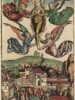
Image 1: 17th Century Spanish School painting “St. Gertrude the Great Carrying the Sacred Heart of Jesus,” from the Cistercian Monastery in Tarragona, Spain. Posted at Novena, November 3, 2011, The words around the heart say: “You will find me in the heart of Gertrude.”
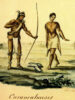
Image 2: Image from prayer card for Saint Gertrude, widely circulated on Facebook and Pinterest.
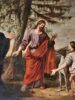
Image 3: Santa Gertrudis, painting by Miguel Cabrera, Mexico, 1763 CE via Wikimedia Commons.
Image 4: Sweetness of My Life, Acrylic Monoprint, Julie Henkener, 2025.









Leave a Reply
Join the conversation by submitting a comment to this blog post below.