The gospel reading today, Luke 14:25-33, begins by saying that “large crowds were traveling with Jesus.” Attracted by his miracles, at witnessing Jesus’ power over demons, diseases, and disabilities, Jesus had developed a big following. But he doesn’t leave it there – He goes on to challenge these travelers by telling them that something more is required, for them to become His true disciples. In this difficult teaching, Jesus tells us exactly what “more” is needed for us to transform from being just a traveler into being a disciple of Jesus – the three things that need to be addressed. First, we must hate our families and our very selves. Second, we must take up or bear our crosses. And third, we must be willing to give up all our possessions.
Hating our Families and Ourselves
Jesus proclaims, “Whoever comes to me and does not hate father and mother, wife and children, brothers and sisters, yes, and even life itself, cannot be my disciple” (Luke 14:25-26). This is shocking – what is he talking about? It seems almost impossible for us to interpret His words to mean that we should literally hate our families and ourselves, when just earlier, in Luke 10:27, Jesus had emphasized love, not hate, by saying, “’Love the Lord your God with all your heart and with all your soul and with all your strength and with all your mind’; and, ‘Love your neighbor as yourself.’”
It could be, as some have written, that His words were just an exaggeration to make a point. However, it’s usually helpful to look at the translation of the text as well. The Greek word for “hate,” miseo, does not imply an emotion of anger, loathing, disgust or wishing harm to another person, which is the way we usually think of the word “hate.” And other bible translations do not use the English word hate. My Catholic bible translates hating your family as turning your back on your family. Also, in the parallel story in Matthew 10:37, Jesus says that those who love family members more than they love Him are not worthy of Him. Here, loving is still good, and the question is more about overall priorities. Also, Jeannine Brown indicates that this use of the word “hate” might be similar to a Hebrew idiom used in the Old Testament, related to priorities. For example, in Genesis 29:30-31, it is written that Jacob loved Rachel more than Leah and that Leah was “hated” by Jacob. A similar use of the Hebrew word for “hate” in reference to loving one wife and hating another occurs in Deuteronomy 21:15-17.
So, which comes first, Jesus or us or our families? It’s our priorities that matter—and a refusal to allow something that is less valuable to replace something more valuable. If we want to follow Jesus, we must put Jesus first. It is easy to get completely zoomed in on our careers or putting kids through college or planning the next vacation or saving for retirement, or on just having fun. These are not individually bad things, but if any or all of them come first in our lives, then we’re behaving more like a traveler with Jesus, rather than an actual disciple.
These sorts of family concerns and priorities are what Richard Rohr would call an essential first half of life approach. However, there is another, second half of life way to understand this gospel reading. In Falling Upward, Rohr writes of this gospel passage, “Jesus uses quite strong words to push us out of the family nest and to name a necessary suffering at the most personal, counterintuitive, and sentimental level possible… Jesus pulls no punches, saying you must ‘hate’ your home base in some way and make choices beyond it.”
Maybe what Jesus means by hating family is to refuse to live by narrow, exclusive ideas of what a family is. Rohr writes, “The unclear family has far too often been the enemy of the global family and mature spiritual seeking.” When our views value family life or our own life more than the justice and love of God, it makes it hard for us to recognize our extended family, and we avoid taking risks for the most vulnerable in our society.
Perhaps too, Jesus knew that there would always be times when people would be tempted to make family their god and to put family first, above everything else, even God. I know this well. I grew up in a tight and very observant Catholic family that completely fractured when my parents divorced after 25 years of marriage. Going through that upheaval and reflecting on my image of God, I discovered that I was viewing family as God and God as family. That realization that my image of God was identical in my mind to my immediate family-of-origin was a profound revelation to me. Eventually, I found that I needed to expand my image of God and, with the help of some good friends, I grew by finding a way to do that.
Bearing Our Crosses
Going on to verse 27, Jesus said, “And whoever does not carry their cross and follow me cannot be my disciple.” Bearing our crosses requires a distinct commitment to stepping out of our comfort zones and accepting a lower degree of control over our lives. I was initially confused by the placement of this quote, since it is before the passion sequence of Jesus’ crucifixion, but I think it may simply serve as foreshadowing. Almost identical language was used in Luke 9:23-25 where Jesus teaches, “Whoever wants to be my disciple must deny themselves and take up their cross daily and follow me.”
I view “carrying the cross” “or “bearing the cross” as a direct metaphor for giving up self-interest and competing priorities and loyalties, as we leave home and become a disciple of Jesus. Richard Rohr writes a lot about leaving the familiarity of home, going on a difficult journey, and returning home to the real and larger home as a changed person. This is the iconic, ancient story of the hero’s journey, like that of Odysseus in Homer’s epic The Odyssey.
But I react instinctively against the idea of bearing our crosses as constant, unhealthy suffering or putting up with disregard or abuse or self-punishment against sin. Instead, to me, in a deeper way, bearing our crosses emphasizes that we must follow Jesus all the way to the cross and tomb. We must go where we do not want to go. This is indeed a strong and challenging message that being a follower of Jesus is not a low cost, low risk proposition. We must navigate well what Rohr calls “necessary suffering” and do the inner work that helps us grow along the way. Finally, this gospel teaches that, when facing adversity, we must look daily, not to family nor to networks of friends nor to other power or resources, but instead to look only to Jesus, who is always with us.
Renouncing our Possessions
Finally, going on to verse 33, what about our possessions? Jesus tells us that we cannot be His disciples if we do not give away everything we own. He said, “therefore, none of you can become my disciple if you do not give up all your possessions.” We are very familiar with this, since He says it repeatedly in the gospels, including in His conversation with the rich man, later in Luke 18:18-25. Again, I think that Jesus is really trying to get us to focus on better priorities. What comes first? Our possessions or Jesus? Which are we really following?
The Greek word that Jesus uses here literally means to renounce our possessions – and to renounce the power they have over us. We live in an affluent country, and mindless consumerism is everywhere. Renouncing the power of possessions means that we need to reduce our preoccupation with money and what we use it for. It’s also instructive to think about “possessions” in the fullest sense – not just our bank balances or the discrete objects we own, but rather all the holdings that entangle us as disciples of Jesus. This includes the imperative first half of life business of securing for our families, safety, health, and everything we and they need to flourish. It includes all the parts of our lives that we manage and tend, everything for which we plan and work and negotiate. It can also include attitudes, memories, or mental processes that keep us from waking up, staying alert, and turning away from our homes and families to embark on the journey to discipleship.
Summary
The gospel reading today, Luke 14:25-33, tells us what more we need to do to move away from just traveling with Jesus, in order to become His true disciples. We must set our priorities in life to renounce consumerism and possessions, to bear our crosses through the adversity we experience, and to leave our home bases so that we can learn to advocate for the larger human family along the way.
Reference 1: Richard Rohr, Falling Upward: A Spirituality for the Two Halves of Life, John Wiley & Sons, Hoboken, NJ, 2024, pp. 52-54.
Reference 2: Laurence, James, Travel with Jesus or Follow Him? My Sermon on Luke 14:25-33, September 3, 2022, https://mypastoralponderings.com/2022/09/03/travel-with-jesus-or-follow-him-my-sermon-on-luke-1425-33/.
Reference 3: Smith, Mitzi, Commentary on Luke 14:25-33, September 8, 2019, https://www.workingpreacher.org/commentaries/revised-common-lectionary/ordinary-23-3/commentary-on-luke-1425-33-4.
Reference 4: Sharp, Caroline, Commentary on Luke 14:25-33, September 4, 2022, https://www.workingpreacher.org/commentaries/revised-common-lectionary/ordinary-23-3/commentary-on-luke-1425-33-5.
Reference 5: Brown, Jeannine, Commentary on Luke 14:25-33, September 5, 2010, https://www.workingpreacher.org/commentaries/revised-common-lectionary/ordinary-23-3/commentary-on-luke-1425-33.
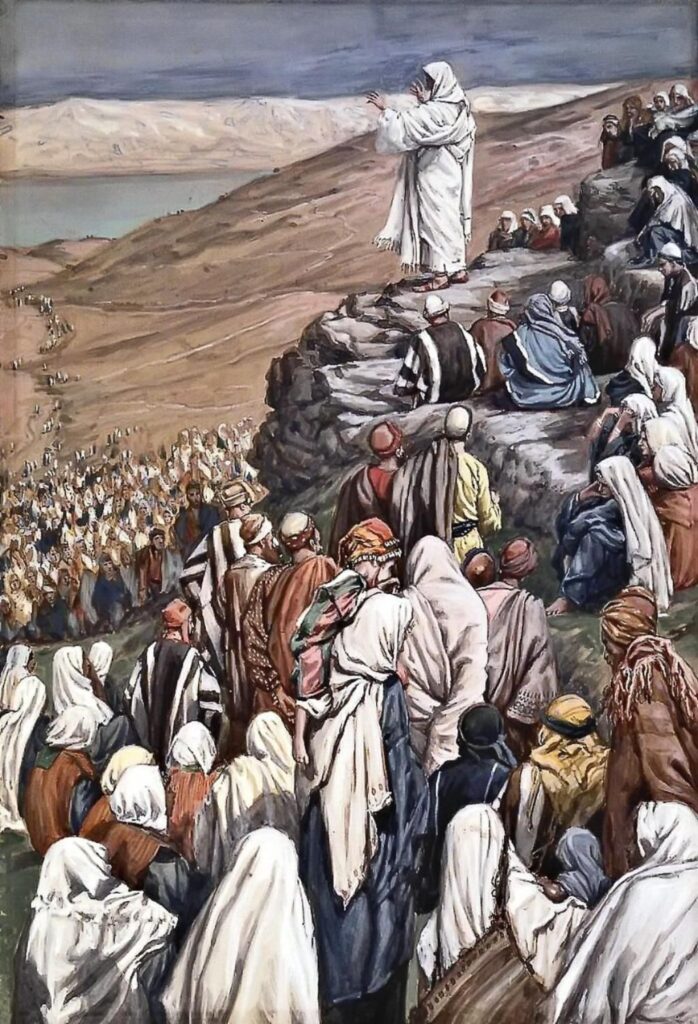
Image 1: “The Beatitudes Sermon” (1886-1896), by James Tissot, (1836-1902), The Brooklyn Museum, public domain, https://www.brooklynmuseum.org/objects/13418.
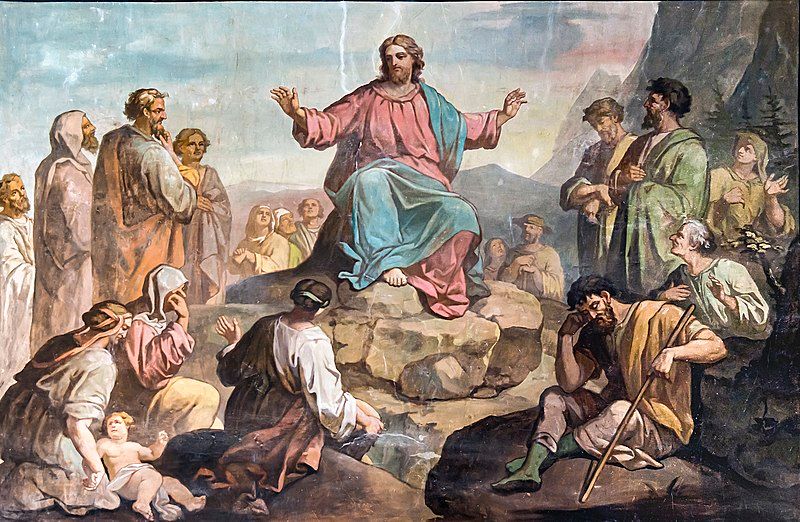
Image 2: “The Sermon on the Mountain” (1870) by Arsène Robert (1830-1895). Castelnau-d’Estrétefonds. St. Martin Church – Prix de Rome, https://commons.wikimedia.org/wiki/File:%C3%89glise_Saint-Martin_de_Castelnau-d%27Estr%C3%A9tefonds_-_Le_Sermon_sur_la_montagne_par_Robert_Ars%C3%A8ne_IM31000073.jpg.
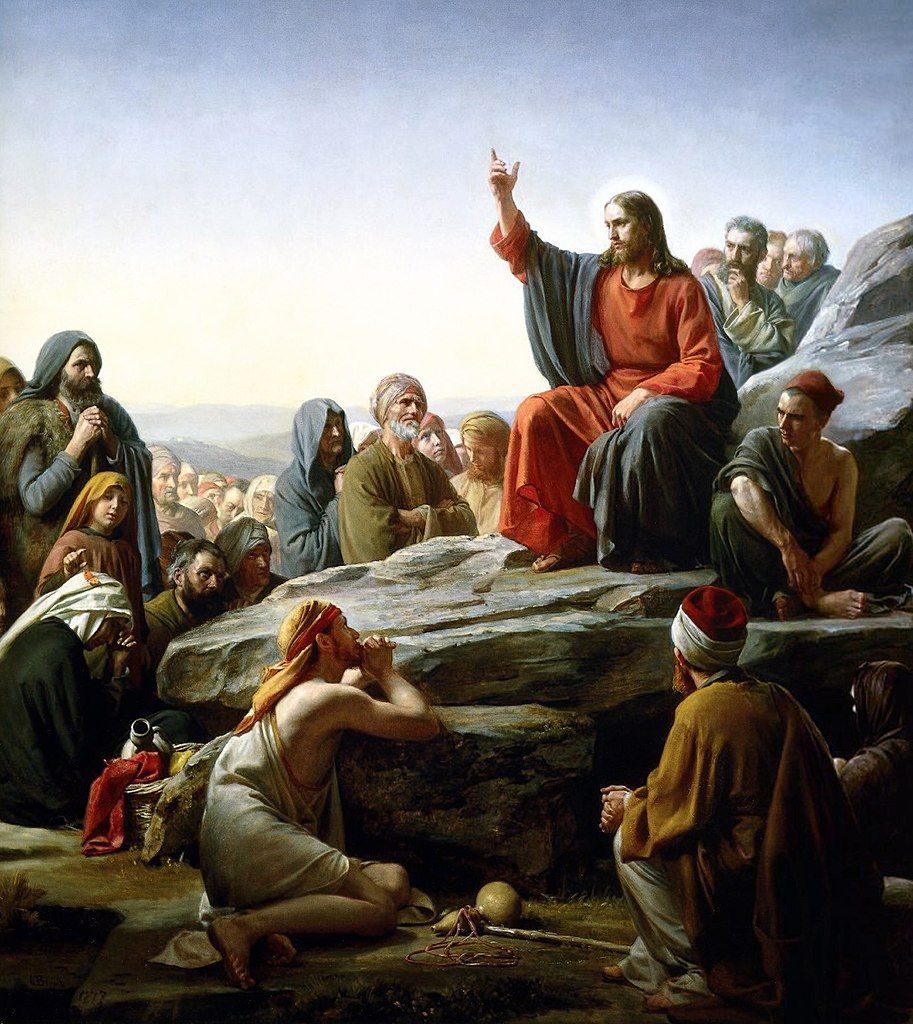
Image 3: “Sermon on the Mount” by Carl Heinrich Bloch, Danish painter, d. 1890, Wikimedia Commons, https://commons.wikimedia.org/wiki/File:Bloch-SermonOnTheMount.jpg, public domain.
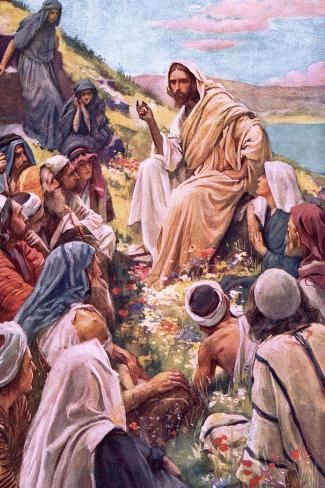
Image 4: “The Sermon on the Mount” by Harold Copping (1862–1917), from “Scenes in the Life of our Lord” published by Religious Tract Society 1907, Wikimedia Commons, https://commons.wikimedia.org/wiki/File:Harold_Copping_-_The_sermon_on_the_mount_-_(MeisterDrucke-52362).jpg, public domain.













.jpg)
2 Comments
Leave your reply.