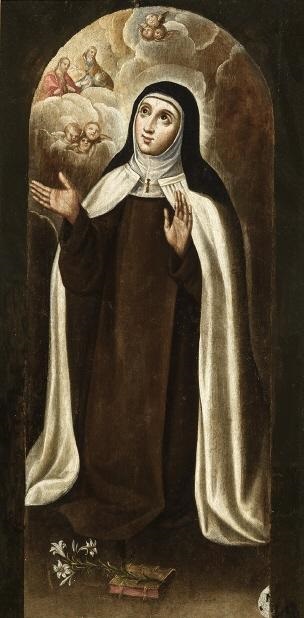
Teresa of Ávila was a sixteenth century Carmelite nun from Ávila, Spain, who wrote spiritual treatises, founded monasteries, and is one of only four women to be honored as a Doctor of the Catholic Church (the others are Catherine of Siena, Hildegard of Bingen, and Thérèse of Lisieux). Teresa was a mystic, religious reformer, author, and theologian of the contemplative life.
I’ve posted about Teresa of Ávila (1515-1582) before, and you can find my previous blog post that includes a summary of her biography here. She is truly a spiritual guide whose knowledge of contemplative practices and the spiritual life is still pertinent today.
This blog post surveys the iconography of Teresa of Ávila and also presents her concept of the Mystical Body of Christ.
ICONOGRAPHY OF TERESA OF ÁVILA
According to a significant blog post on the iconography of Teresa of Ávila, Margaret Duffy at the Ad Imaginem Dei website writes, “Much of [Teresa’s] iconography focuses on her visionary relationship to Jesus Christ and his redemptive suffering. It also includes references to her reforming zeal, to her human life story and to her other visionary experiences.”
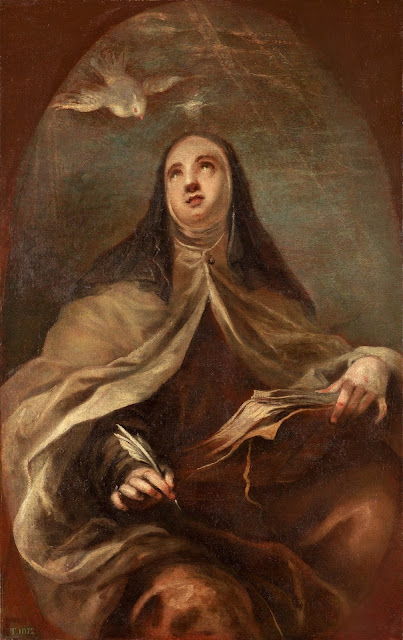
Images of Teresa as Writer
There are many examples of images of Teresa of Ávila that are biographical in nature, focusing on her intense defense for her reform movement, her establishment of new monasteries, or her role as a miraculous healer. However, perhaps the most common iconography of this type shows her with a book or pen or both. As in image 2, she is often portrayed as a writer, who was inspired by the Holy Spirit, here symbolized as a dove. Teresa’s books include The Way of Perfection and The Interior Castle.
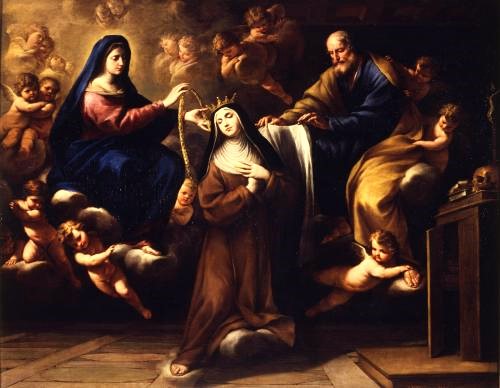
Images of Mary Entrusting Teresa to Joseph
Margaret Duffy writes, “Among the works of art inspired by Saint Teresa are a group that illustrate the idea that the Virgin Mary entrusted Saint Teresa to the care and protection of Saint Joseph, Mary’s husband.” As mentioned in my other blog post about her life, Teresa became very attached to Saint Joseph, since she attributed her recovery from an early illness to his intercession. Image 3 is an example of this iconography, and Duffy’s blog post shows other depictions of Teresa being entrusted to Saint Joseph.
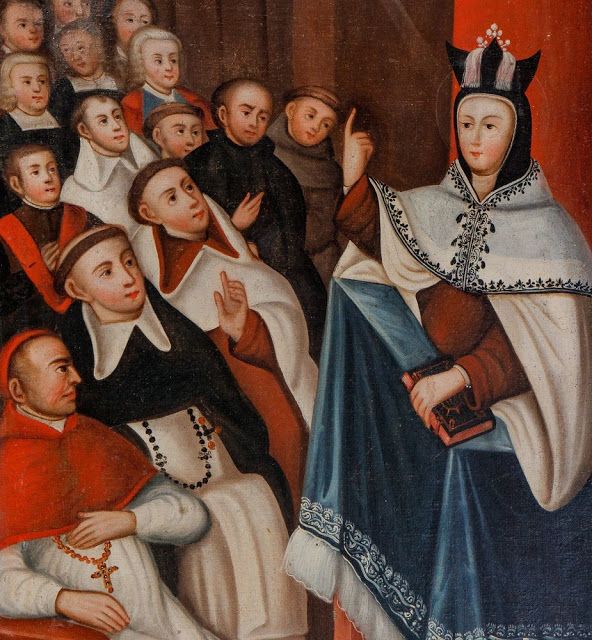
Images of Teresa Wearing a Biretta
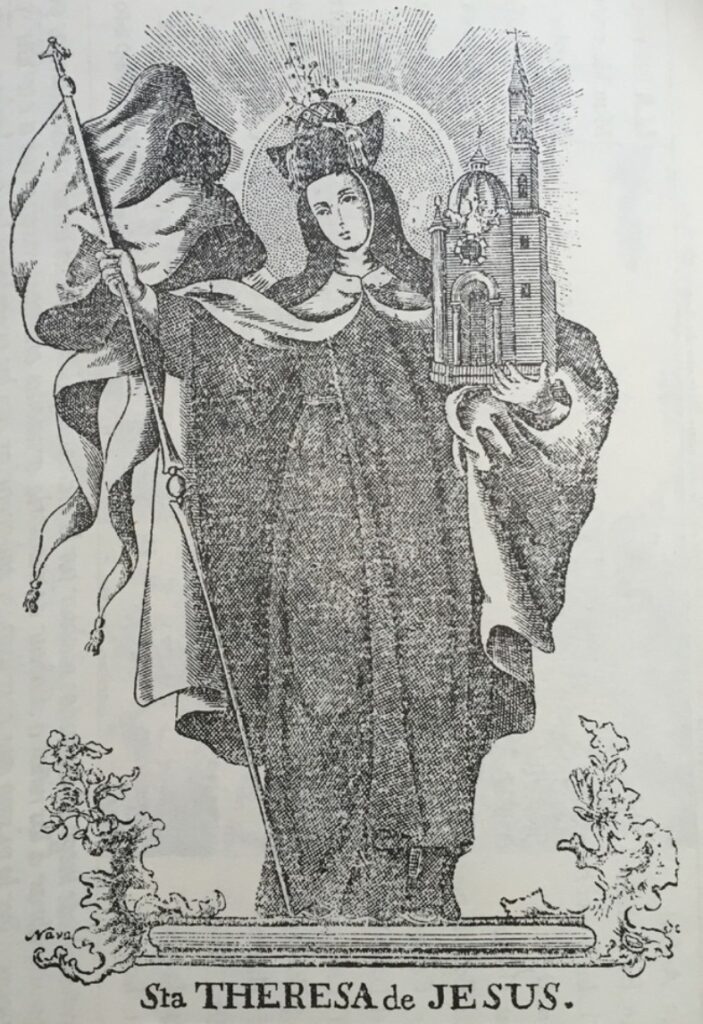
In some images, Teresa is shown wearing a four-cornered biretta, a head covering that was usually restricted to ecclesiastical, academic, and judiciary uses. In academic circles, the color of the tuft corresponded to the discipline studied: white for theology, red for law, yellow for medicine and blue for philosophy. Mentioned as early as the tenth century, the word biretta comes from the Latin birrus, meaning “cloak with a hood.” This iconography may have been introduced by students at the University of Salamanca, a school where Teresa taught. Today, the biretta is still worn by some Roman Catholic clergy and people who have received a PhD from a pontifical university.
Images of Teresa Adoring Christ
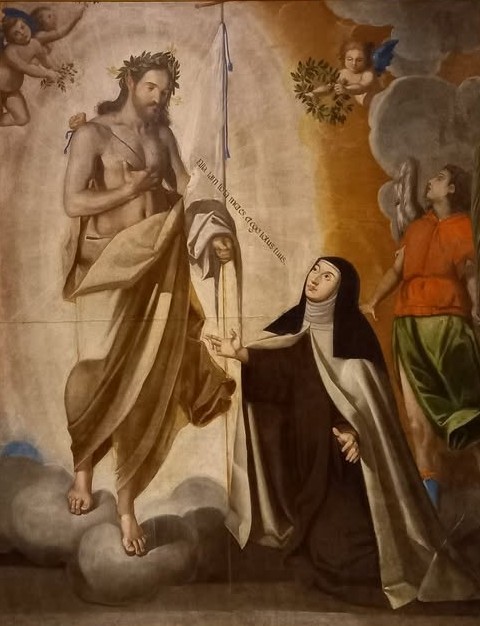
There are also many works of art that highlight the sanctity and visionary experiences that were fundamental to Teresa’s faith. Some images of Teresa show her meditating with a crucifix or in adoration of the risen Christ. In image 6, Jesus appears to Teresa, standing on puffy grey clouds. It appears that he is speaking to her Latin words that I cannot decipher at all, no matter how much I zoom in.
Transverberation Images
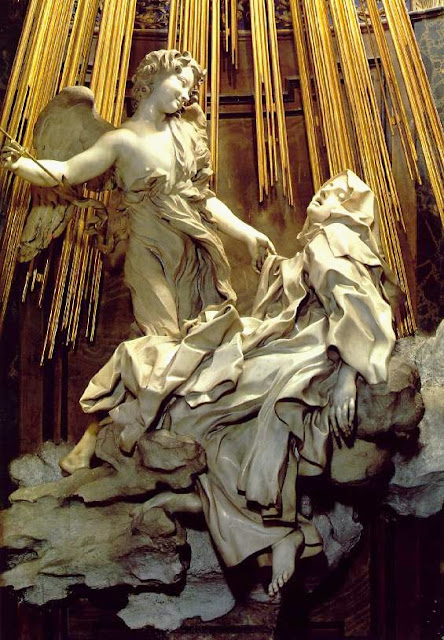
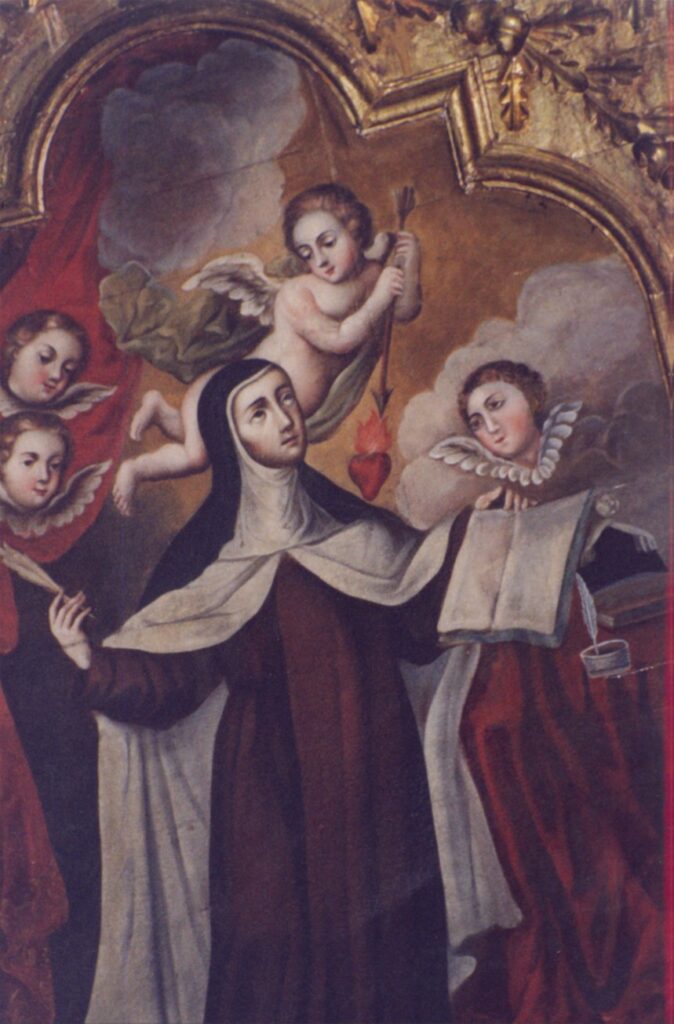
And of course, Teresa is frequently represented in an iconography of her most famous visionary experience, the transverberation. On the feast day of Saint Peter in 1559, Teresa became convinced that Jesus had invisibly presented himself to her in bodily form. This initiated a series of visions that continued almost without interruption for more than two years. In one particular vision, which is called the transverberation, a seraph repeatedly drove a golden spear into her heart, causing her ineffable spiritual and bodily pain that she described as follows:
I saw in his hand a long spear of gold, and at the point there seemed to be a little fire. He appeared to me to be thrusting it at times into my heart, and to pierce my very entrails; when he drew it out, he seemed to draw them out also, and to leave me all on fire with a great love of God. The pain was so great, that it made me moan; and yet so surpassing was the sweetness of this excessive pain, that I could not wish to be rid of it.
Libro de Mi Vida, Autobiography of Teresa of Ávila
Probably the most well-known image of the transverberation can be found in the chapel dedicated to Teresa of Ávila in the church of Santa Maria della Vittoria in Rome. Image 7 is a photograph of this masterpiece of the Baroque movement, created by Gianlorenzo Bernini in the 1647-1652 time frame. This image depicts Teresa in an ecstatic, eroticized trance just before the arrow’s thrust. See reference 1 for many more photographs and details about the chapel and Bernini.
Images of Teresa Entering Heaven
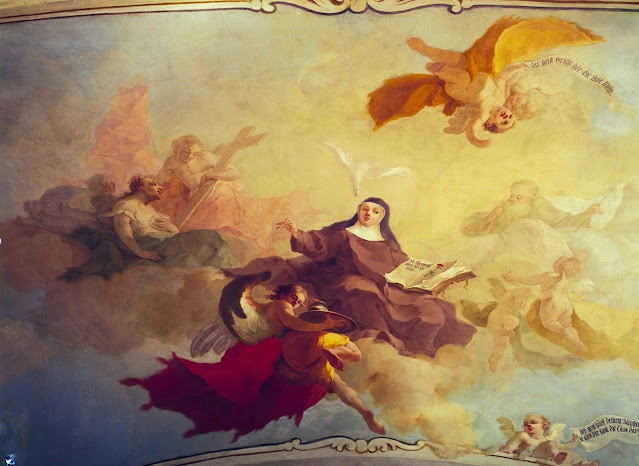
Finally, some artists have imagined Teresa as she is welcomed into heaven, greeted by angels and other heavenly hosts. In image 8, she is shown in the golden light and cumulous clouds as she ascends into the sky, borne up by an angel and a figure in a scarlet cape. Accompanied by the Holy Spirit, symbolized by the dove, Teresa still holds a book and pen, as if she were still writing when she passed away. The feast day of Teresa of Ávila is celebrated by the faithful on October 15.
TERESA’S MYSTICAL BODY OF CHRIST
Teresa is the only writer that I quoted more than once in my book, Women Give Voice to Wisdom: Praying Lectio-Visio Divina. In addition to the quote that I shared in my other blog post about Teresa, I was strongly attracted to a quote that imagines all of us as part of the mystical body of Christ and tells us exactly how we are supposed to behave. There are a few different variations of the following quote, but I settled on this one:
Cristo no tiene cuerpo sino el tuyo.
No tiene manos ni pies en la tierra, excepto los tuyos.
Tuyas son las manos con El que bendice todo el mundo.
Tuyos son los pies con los que camina para hacer el bien.
Tuyos son los ojos a traves de los cuales
El mira a este mundo con compasion.
Tuyos son los ojos con los que ve compasion en este mundo.
Cristo no tiene cuerpo en la tierra, sino el tuyo.
Teresa de Jesús (1515-1582)
Here is my own translation into English and the acrylic monoprint,The Mystical Body of Christ, that I made to go with it:
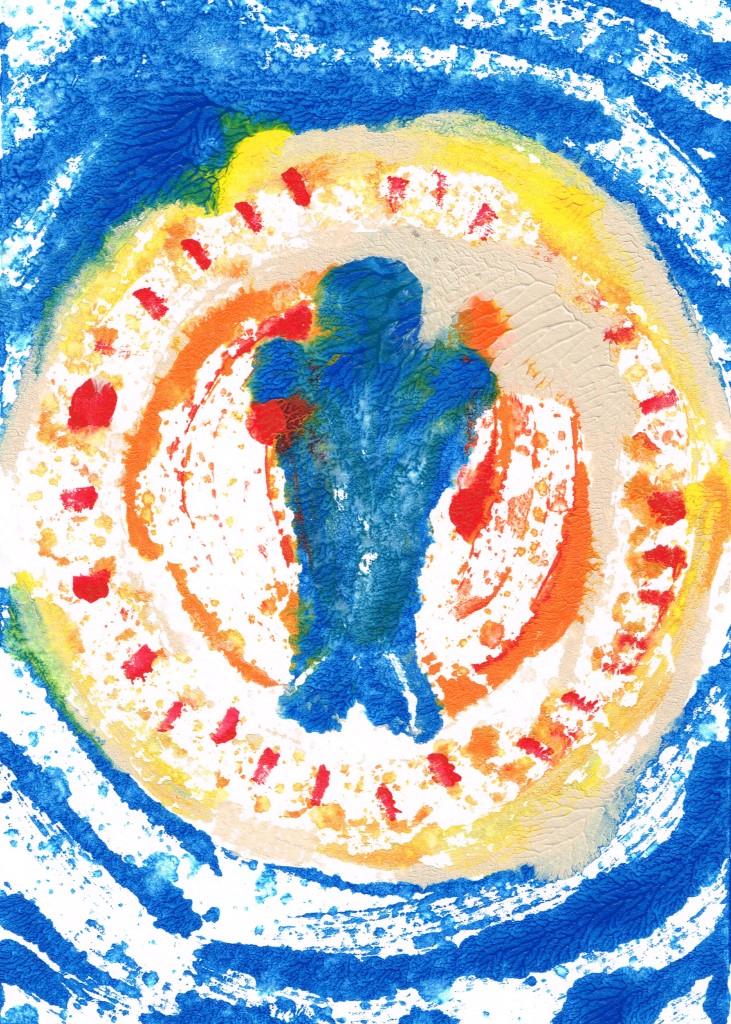
Christ has no body but yours.
He has no hands or feet on earth except yours.
Yours are the hands with which He can bless the world.
Yours are the feet with which He can walk and perform good works.
Yours are the eyes through which He can look with compassion on this world.
Christ has no body on earth now but yours.
Teresa of Jesus (1515-1582)
Reference 1: Duffy, Margaret, Teresa of Avila – Mystic, Practical Woman, Doctor of the Church, blog post at Ad Imaginem Dei website, October 15, 2023.
Reference 2: Viar, Lucas, Saint Teresa of Avila’s Biretta: A Brief Introduction to the Iconography of St. Teresa of Avila as Doctrix Ecclesia, Liturgical Journal, October 16, 2020.
Reference 3: Antonio Rubial Garcia, Saint Teresa’s cap and infused knowledge: Creation and expansion of a new feminine model in New Spanish art, Anales del Instituto de Investigaciones Esteticas 1(112):99-131, 2018.
Reference 4: Teresa of Ávila, The Interior Castle, Kieran Kavanaugh and Otilo Rodriguez, trans., Paulist Press, Mahwah, NJ, 1979.
Reference 5: Broughton, Rosemary, Praying With Teresa of Ávila, The Word Among Us Press, Ijamsville, MD, 1990.
Image 1: Juan del Castillo (1584–1640), Santa Teresa de Jesús, Museo de Bellas Artes de Sevilla, Wikimedia Commons, public domain.
Image 2: Francisco de Herrera el Mozo, Santa Teresa de Jesús, Spanish, circa 1667-1670, Museo Nacional del Prado.
Image 3: Andrea Vaccaro (1642),Saint Teresa’s Vision of the Collar, Royal Academy of Fine Arts San Fernando, Wikimedia Commons, public domain.
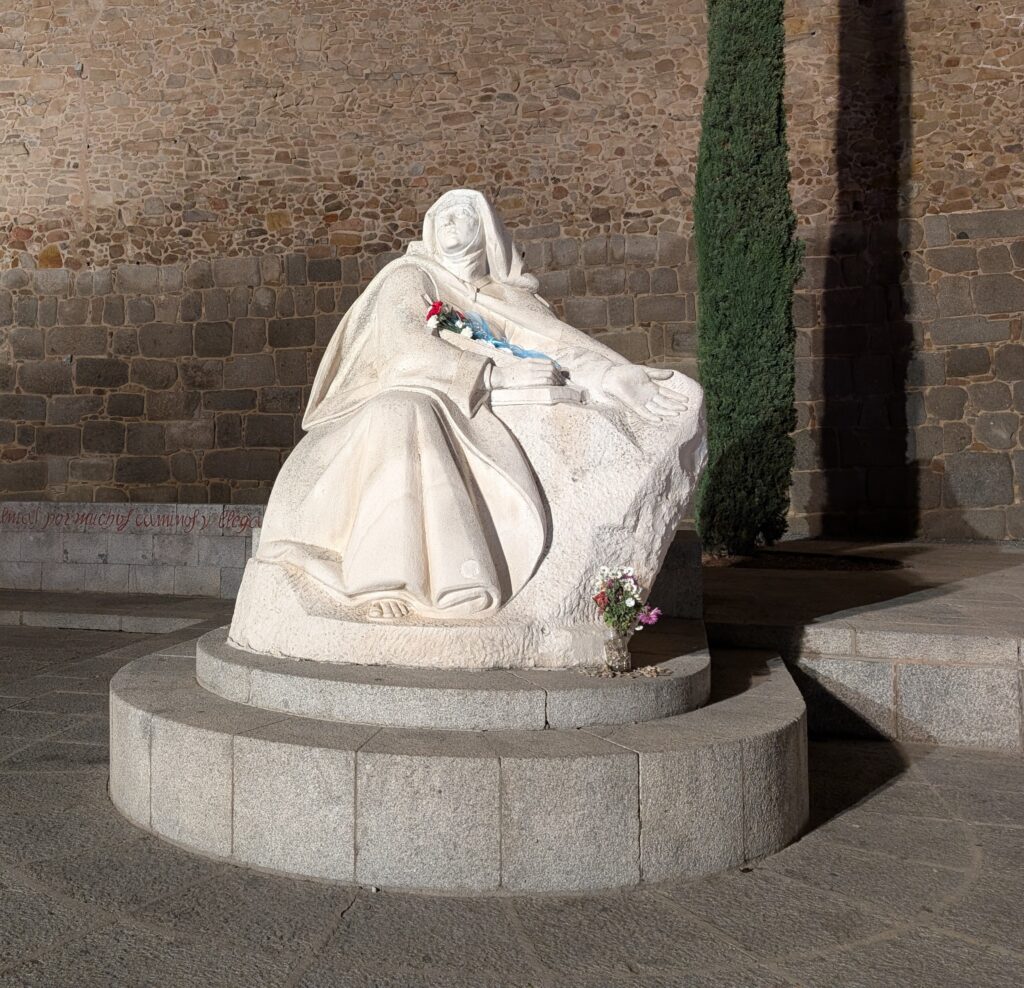
Image 4: Anonymous artist of the Cusco school, Saint Teresa Teaches Scholars,18th century, St. Teresa Museum, Arequipa, Peru.
Image 5: José de Nava, Santa Teresa de Ávila Como Doctora, engraving, second half of 18th century, private collection.
Image 6: Lorenzo Aguilar, The Apparition of the Risen Christ, 17th century Spanish, Monastery of the Annunciation, Alba de Tormes, Spain.
Image 7: Gianlorenzo Bernini, The Transverberation of Saint Teresa of Ávila, Italian, circa 1647-1652, Rome, Santa Maria della Vittoria, Cornaro Chapel, Central Group.
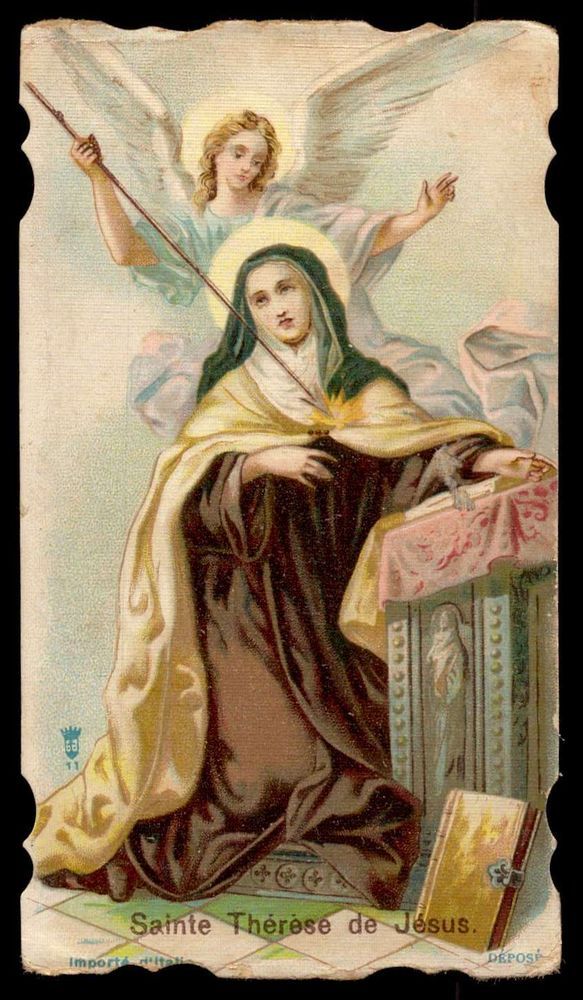
Image 8: Anonymous, Saint Teresa in Glory, Saint Elizabeth Hospital, Vienna, Austria, 1748.
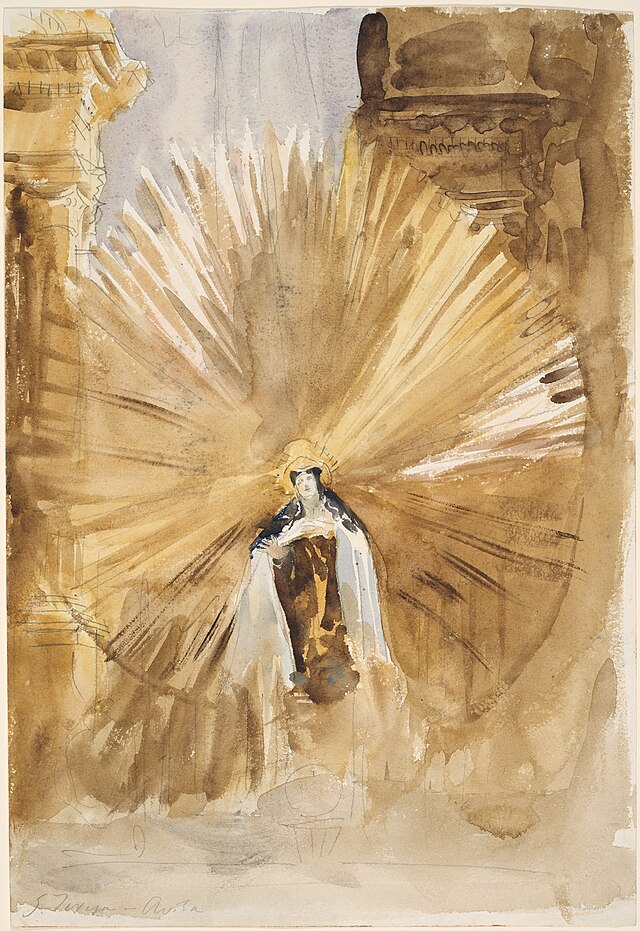
Image 9: John Singer Sargent, Saint Teresa of Ávila, Harvard Art Museums/Fogg Museum, Gift of Mrs. Francis Ormond, Object Number 1937.8.67, circa 1903.
Image 10: The Mystical Body of Christ, Julie Henkener, 2025.
Image 11: Anonymous, Santa Teresa de Jesús con el Corazón Traspasado, first half of 18th century, parish church at Yauhquemecan, Puebla, photograph by Doris Bieñko.
Image 12: Sculpture of Teresa of Ávila in Ecstasy, photograph by Julie Henkener, Ávila, Spain, November 2025.
Image 13: Holy card image of Transverberation of Teresa of Ávila,widely circulated on Facebook and Pinterest.





.jpg)
.jpg)

Leave a Reply
Join the conversation by submitting a comment to this blog post below.