Welcome to Advent 2–the second Sunday of Advent. The bible texts for this week are all about bringing life to barrenness.
In the Beginning
The gospel of Matthew begins with the genealogy of Jesus, and the gospel of John begins with the image of Jesus as The Word. But the gospel text this second Sunday of Advent is taken from the beginning of the gospel of Luke, which is the only gospel that records the story about Elizabeth and Zechariah. From the very beginning, Luke points us back to the older and larger story of faith and covenant between God and the people of God.
In this reading, we meet Zechariah and his wife Elizabeth, who were advanced in age and righteous before God, but childless—with all hope of having children gone. Over the course of their lives, this must have been a big hardship for them and a source of shame. In biblical times, the two most important things in life were land and children. Women like Elizabeth, who were unable to bear children, were considered barren and directly blamed and shamed for the infertility.
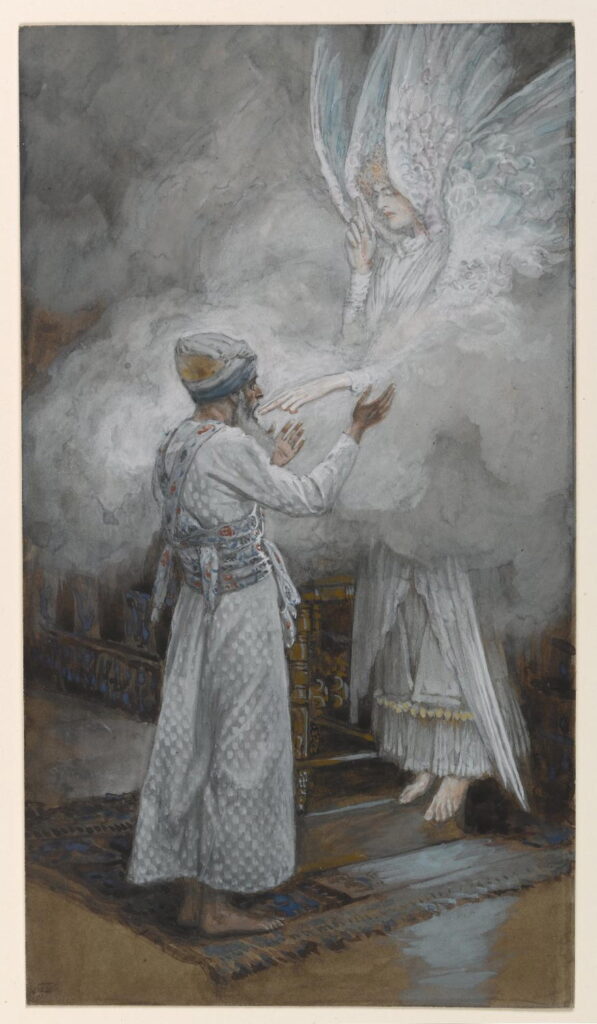
In the days of the ruler Herod, there was a priest named Zechariah, of the priestly class of Abijah. His wife Elizabeth was a descendant of Aaron. Both were worthy in the sight of God and scrupulously observed all the commandments and observances of Our God. They were childless–unable to conceive–and they were both advanced in years. Now it was the turn of Zechariah’s priestly class to serve. And as he was fulfilling his priestly office before God, it fell to him by lot, according to priestly usage, to enter the sanctuary of Our God and offer incense. While the full assembly of the people was praying outside at the time of day when the incense was offered, an angel of Our God appeared to him, standing to the right of the altar of incense.
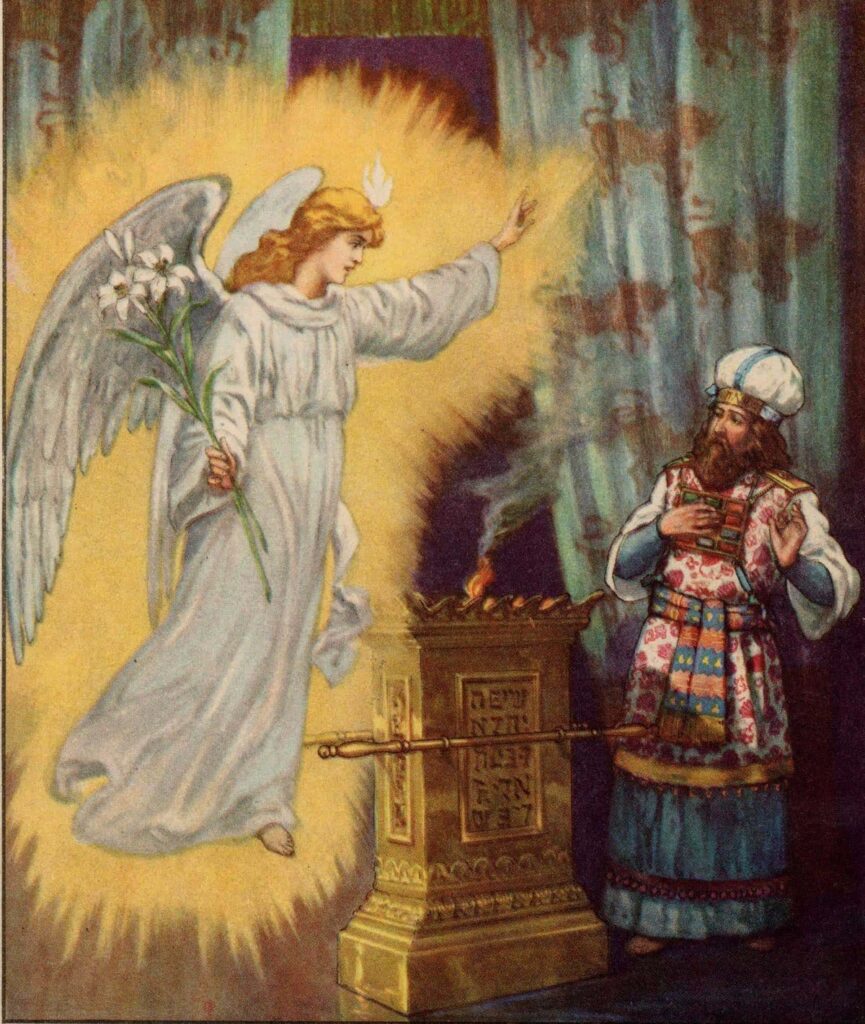
Zechariah was deeply disturbed upon seeing the angel, and was overcome by fear. The angel said to him, “Do not be frightened, Zechariah. Your prayer has been heard. Your wife Elizabeth will bear a son, whom you will name John. He will be your joy and delight, and many will rejoice at his birth, for he will be great in the sight of Our God. He must never drink wine or liquor, and he will be filled with the Holy Spirit from his mother’s womb. And he will bring many of the children of Israel back to their God Most High. He will go before God as a forerunner, in the spirit and power of Elijah to turn the hearts of parents to their children, and the rebellious to the wisdom of the just–to make ready a people prepared for Our God.”
Sometime later, Elizabeth conceived. She went into seclusion for five months, saying, “Our God has done this for me. In these days, God has shown favor on us and taken away the disgrace of our having no children.” (Luke 1:5-17, 24-25)
Old Testament Parallels
Yet this story of Elizabeth and Zechariah is quite familiar, since it refers directly back to the narrative about Sarah and Abraham (Genesis 18:1-15). Sarah and Abraham were promised descendants as numerous as the stars, even though both were supposedly over 90 years old and had long ago given up hope for children. Nevertheless, Sarah became pregnant with Isaac, when she was clearly way beyond typical childbearing years. It seems to me that God really loves these opening of the wombs to fulfill sacred promises with miraculous baby stories. These accounts, including those of Rebekah (Genesis 25:19-26), Samson’s mother (Judges 13:2-25), Hannah (1 Samuel 1:1-2:10), and the Shunammite woman (2 Kings 4:8-37), detail that God often chooses unlikely people and unexpected ways to bring new life into the world. God brings new life to barrenness.
Priestly Duties
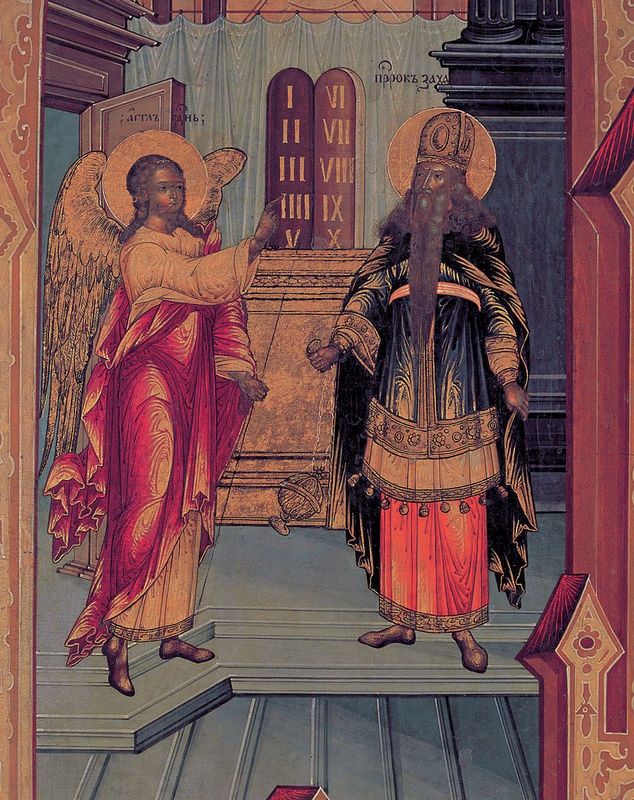
Zechariah was likely a priest because it ran in his family, and there were many priests in Elizabeth’s family too. At that time, there were up to 20,000 priests in Israel, but only one temple. Chris Ritter writes that the priests were “organized into twenty-four ancestral divisions that served in Jerusalem twice a year for a week at a time.” Every day, a single priest was selected by lot to offer the incense in the morning, when the gates of the temple were opened, and again at the mid-afternoon prayer time. The faithful would gather in the temple courts, and the chosen priest, representing all the people, would enter the Holy Place and burn incense, as prescribed by the law of Moses. As the smoke of the incense rose to heaven, so did the prayers of the people. After serving in this way, the priest would be taken off the list, so that this was effectively a once-in-a-lifetime experience. Some priests went their whole lives without being selected.
Zechariah’s Vision
So, in this story, Zechariah was chosen by lot and was in the process of offering incense and prayers when he was suddenly in the presence of the angel Gabriel, who brings to him an incredible and surprising promise of a son, who would become John the Baptist, to be born to his wife Elizabeth. Not surprisingly, Zechariah expressed skepticism, so the angel replied, “I am Gabriel, who stands before God. I was sent to speak to you and bring you this good news. But because you have not trusted my words, you will be mute—unable to speak—until the day these things take place. They will all come true in good season.” In the meantime, the people in the temple courts were waiting for Zechariah, perhaps wondering at his delay. When he appeared and was unable to talk to them, they realized that he must have seen a vision.
Elizabeth’s Response
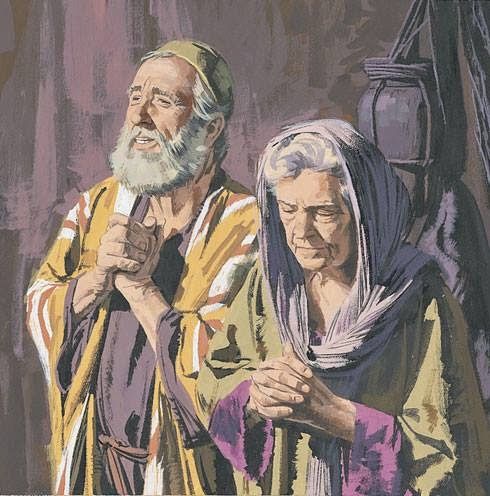
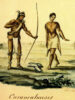
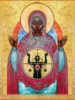
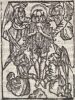
Speechless, Zechariah returned home and, as foretold by the angel, Elizabeth became pregnant, going into seclusion for five months. She was devout, and this was a huge change for her, so a time of prayer and grappling with this bringing of life into barrenness would seem warranted. In addition, she may have been taking precautions, in fear of a miscarriage of what must have been a high-risk pregnancy. I found this image of Zechariah and Elizabeth online, and Zechariah looks absolutely thrilled. However, Elizabeth is humbly looking down at her folded hands with what I imagine might be a look that says, “Really? Don’t you think I’m just a little too old for this?” But Elizabeth, like Sarah, recognized God’s hand in these events. She reappears after her time apart, praising God and saying, “This is the work that God has done for me, looking favorably upon me and taking away my disgrace among humankind.”
Bringing Life to Barrenness
The supporting bible texts for this week are also all about bringing life to barrenness. The first lesson today is Isaiah 54:1-8, which begins with this exclamation: “Shout for joy, O barren woman, who bears no children; break forth in song and cry aloud, you who have never travailed; because more are the children of the desolate woman than of her who has a husband.” This is followed by God’s promise: “Do not be afraid, for you will not be put to shame; do not be intimidated, for you will not be humiliated.” Here Isaiah is depicting Israel and the humiliation of the people from the Babylonian exile as a barren woman who can now sing because new life has begun within her womb.
And the second lesson is Hebrews 11:8-13. In this letter, the Hebrews were reminded of the faithfulness of God in bringing to Abraham and Sarah land and children, as promised and sealed by their covenant.
By faith, Sarah and Abraham obeyed when they were called, and went off to the place they were to receive as a heritage; they went forth, moreover, not knowing where they were going. By faith, Sarah and Abraham lived in the promised land, as resident aliens, dwelling in tents with their children and grandchildren, who were heirs of the same promise–for they were looking forward to the city with foundations, whose designer and maker is God. By faith, Sarah received the ability to conceive, even though she was past childbearing age, for she thought that the One who had made the promise was worthy of trust. As a result of this faith, there came forth from one woman and one man, themselves as good as dead, descendants as numerous as the stars in the sky and the sands of the seashore. All of them died in faith. They did not obtain what had been promised but saw and welcomed it from afar. By acknowledging themselves to be strangers and exiles on the earth, they showed that they were looking for a country of their own. (Hebrews 11:8-13)
Here, we are asked to remember the unexpected fulfillment of the promise of God when Sarah became pregnant with Isaac. This reference to the story of Sarah runs parallel to the gospel reading and God’s surprising revelation to Zechariah that his wife Elizabeth will become pregnant, which does comes pass.
In this way, today we can trust that God faithfully brings life to barrenness in us as well, opening us to new life, even when times are dark and new life seems impossible. What do we see that is barren within us? Maybe we are worn down in grief by the loss of a loved one or exhausted from running around trying to make ends meet. Or maybe we are feeling empty and abandoned by our friends or stressed by our own unreasonable expectations of ourselves at work. Perhaps we are feeling overwhelmed by so much dire political news or just life in general. Whatever our anxieties and needs are, we must remember that with God, there are no dead ends, and we can trust in the faithfulness of God, even when we do not understand God’s ways or God’s timing. And it’s good to keep in mind that with God, all things are possible, and that God is always turning despair into hope and sorrow into joy. As we reflect on the readings for today, we can be confident that our faithful God will bring life to whatever is barren within us.
Readings: The Inclusive New Testament, Priests for Equality, Brentwood, MD, 1994.
Reference 1: Chris Ritter, This Changes Everything: Luke 1:5-25, blog post at the People Need Jesus website, December 8, 2020.
Reference 2: Elisabeth Johnson, Zechariah’s Song, Commentary on Luke 1:5-13 [14-25] 57-80, blog post at the Working Preacher website, December 22, 2019.
Reference 3: Brittany E. Wilson, Zechariah’s Song, Commentary on Luke 1:5-13 [14-25] 57-80, blog post at the Working Preacher website, December 24, 2023.
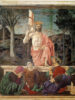
Image 1: “The Vision of Zacharias,” (1886-1894), by James Tissot, (1836-1902), Brooklyn Museum, public domain, https://www.brooklynmuseum.org/objects/4419.
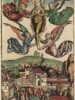
Image 2: “Zechariah and Angel,” drawing by Otto Semier, perhaps based on engraving by Carolsfeld, public domain, https://www.flickr.com/photos/32495192@N07/10807605964.
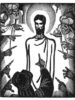
Image 3: “Annunciation to Zechariah,” fragment of Russian icon “Execution of St. John the Baptist, 1798, Wikimedia Commons, https://commons.wikimedia.org/wiki/File:Annunciation_to_Zechariah.jpg, public domain.
Image 4: “Zacharias and Elisabeth Praying,” image widely circulated online, possibly by Paul Mann, please send me more details if you know them.







Leave a Reply
Join the conversation by submitting a comment to this blog post below.